Wedding party with diverse family and hidden bride (UK)
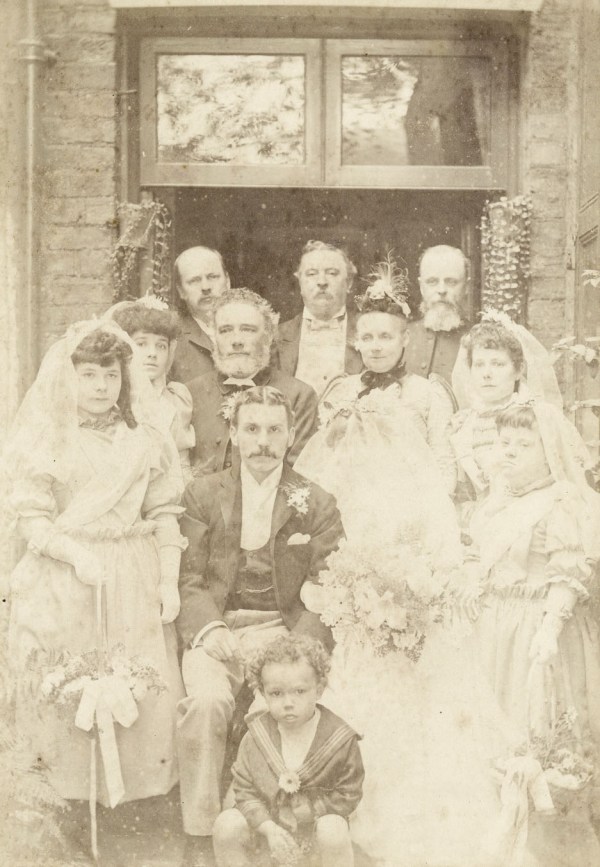
The wedding party in this cabinet card portrait is unusual in its diversity.  The young woman at lower right appears to have Down syndrome, while the little boy at the front of the group is of mixed-race ancestry.  Oddly, the bride's face is completely obscured by her veil, making her unrecognizable.  She sits at the... Continue Reading →

Couple with their grandson in Gnesen, Prussia (Gniezno, Poland)

This cabinet card was made at a studio called Atelier Mąke in Gnesen, Prussia, which is now Gniezno, Poland. An astute visitor to this page, D.B. from Milwaukee, informed me that Atelier Make was owned and operated by a woman named Ludwika Mąke, who worked as a professional photographer in Gniezno for 35 years.  That's... Continue Reading →

Elfenreigen (Dance of the Fairies)

The closest English equivalent of the German word Elfenreigen would be "fairy round dance," although Elfenreigen is also sometimes translated as "dance of the elves."  "Carlsberg" may have been the location where this photo was taken.  A very kind visitor to the blog (bradwardine42) left a comment under the post with the following information: I... Continue Reading →

Bedtime

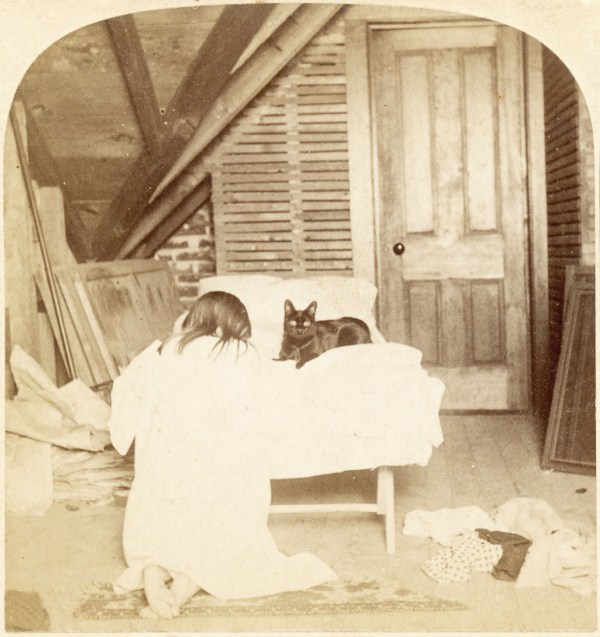
"Now I lay me down to sleep" Stereoviews often portrayed scenes of domestic life, with people in costumes and staged settings.  Such narrative scenes were generally meant to entertain or amuse.  Some, especially the ones with children, were designed to touch a sentimental chord in the viewer.  The subject of children saying bedtime prayers was... Continue Reading →

Woman with Civil War (period) binoculars

This is the first tintype I've put on the blog.  Though darker than photos printed on paper, tintypes were inexpensive to produce and more durable than paper, which made them quite popular in the 1860s and 1870s.  Soldiers carried them during the American Civil War.  They could be produced easily in a mobile studio, so... Continue Reading →

Vermonter who’d rather be doing something useful

Vermonters and other New Englanders have traditionally been considered industrious, pragmatic and thrifty.  Vermont is an agricultural state with no major cities.  Hardscrabble family farms, called hill farms, were the norm for much of the state's history.  The man in this portrait looks to me like a hard-working, no-nonsense farmer who doesn't take days off... Continue Reading →

Fabyan House staff in the White Mountains (1880)

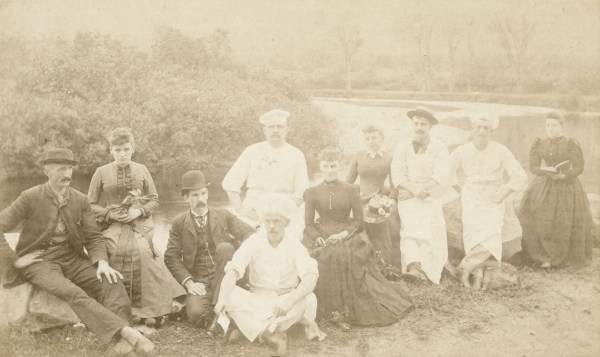
Fabyan House was a grand resort hotel in the White Mountains of New Hampshire.  Completed in 1873, it was named after Horace Fabyan, who had operated a hotel on the same site called the Mount Washington House, which had burned in 1853. Fabyan House had 250 rooms for up to 500 guests.  It had its own... Continue Reading →

Connie Richards with her camera in Massachusetts

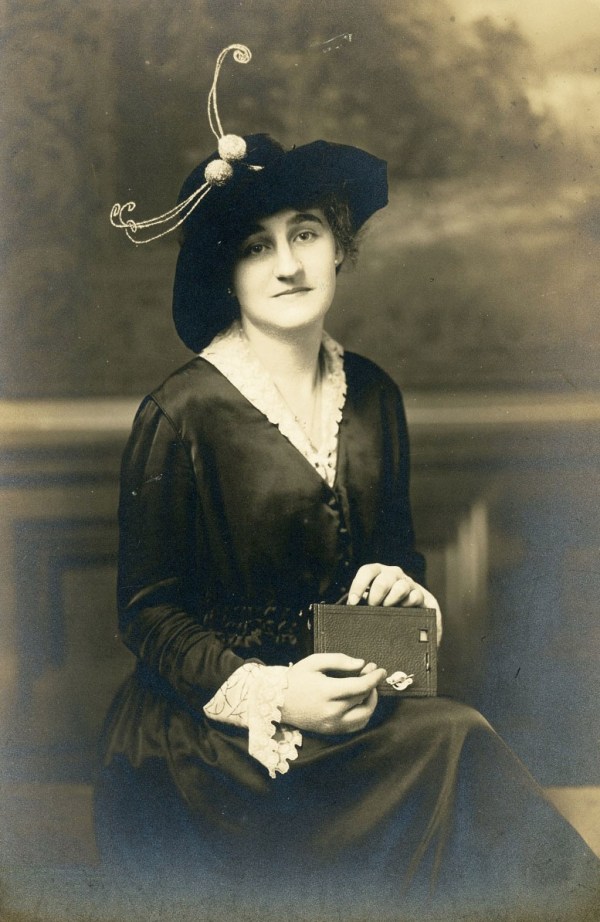
The back of this postcard has a note: "Connie Richards, friend of Aurore (Chaillé) Marotte."  Aurore is easy to find in Census records, but Connie eluded me.  In 1920 Aurore B. Marotte (age 25) was living with her husband, Adelard, and her siblings in the home of her father, Azaire Chaillé, in New Bedford, Massachusetts. ... Continue Reading →

Albin Lindall and friends on a wintry day in Minnesota

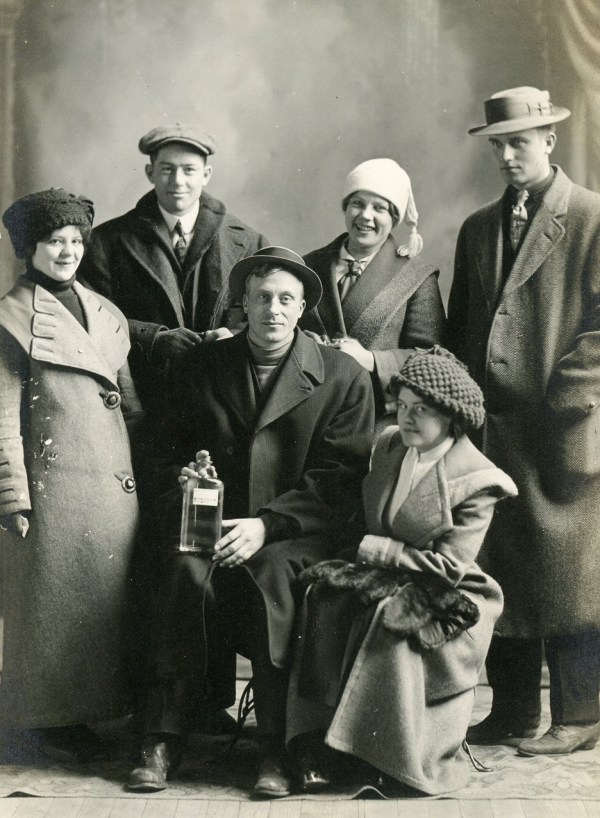
UPDATE: Albin Lindall is most likely the man standing at right.  I found a passport photo of him on Ancestry.com that was taken some years later, when he was 29.  Albin Lothard Lindall was born in Parkers Prairie in 1890, and the passport was issued in 1919, when he was a doctor and a lieutenant... Continue Reading →

“Princess Victoria” renamed “Princess Mary” for one day (Feb. 28, 1922)

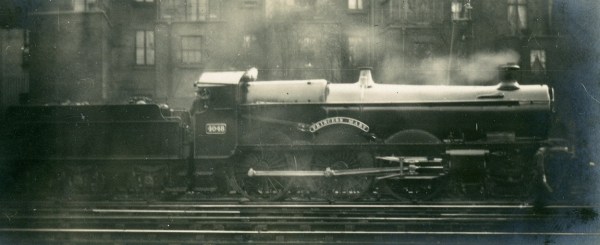
Built in 1914 at Swindon Works in Wiltshire, England, the steam locomotive Princess Victoria (4048) remained in service until 1953.  On February 28, 1922, HRH Princess Mary was to marry Viscount Lascelles, future Earl of Harewood.  A locomotive was required for the royal train.  The logical choice would have been an existing engine in the... Continue Reading →

Jean Ingelow, British poet and novelist

I had never heard of Jean Ingelow before I saw this carte-de-visite, but her pose and expression charmed me.  It was made by the studio of Elliott & Fry in London, where she lived.  The daughter of an English banker father and a Scottish mother, she was the oldest of ten children. Jean Ingelow (1820-1897)... Continue Reading →

Family in Brussels

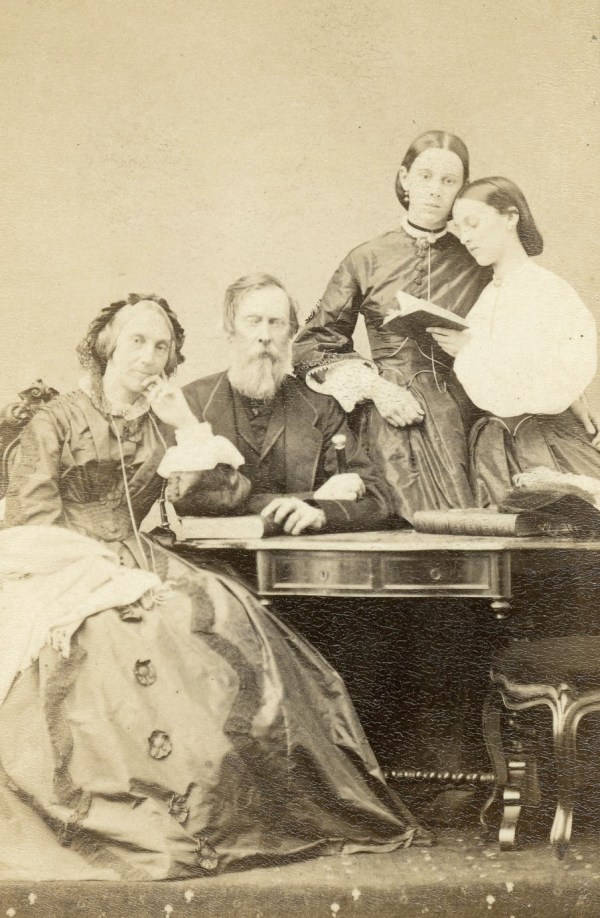
This carte-de-visite was made by the studio of Albert Baron & César Mitkewicz in Brussels (Bruxelles), Belgium.  The mother's gaze engages the viewer while the father's seems unfocused.  The two sisters pose affectionately as the younger one reads from a book.  

Blog at WordPress.com.

Up ↑