Ann Birkin, chevener to Queen Victoria

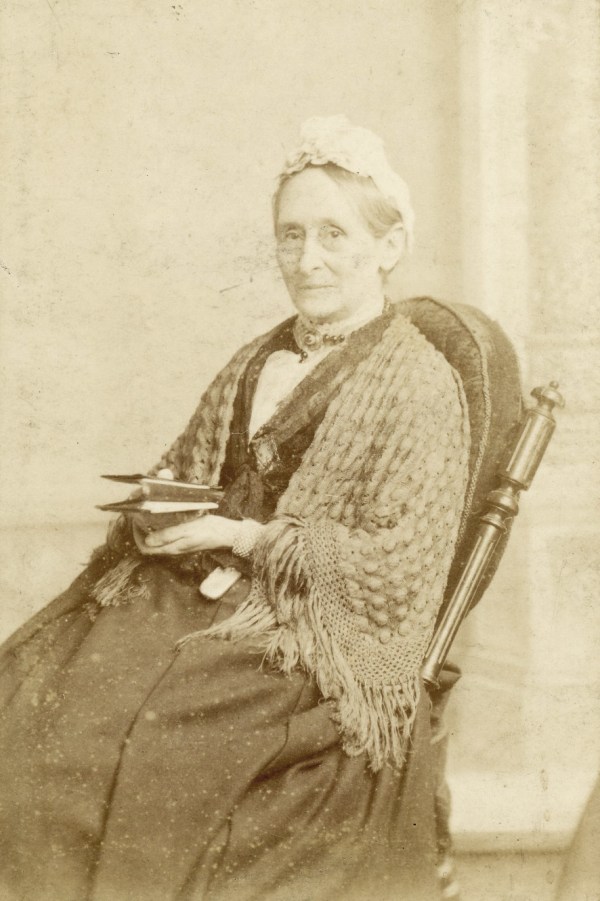
The woman in this carte-de-visite portrait isn't identified anywhere on the photo.  When I bought it last year, I never expected to learn her identity.  Three weeks ago, while browsing the website of Britain's Royal Collection Trust, I noticed a woman who looked very familiar.  The first thing that drew my attention was her shawl,... Continue Reading →

Henry Lenthall, early British photographer

The man above is Henry Lenthall (1819-1897), a photographer who operated a studio at 222 Regent Street, London, where the photo was printed.  The studio had been established in 1856 by pioneering daguerreotypist William Edward Kilburn (1818-1891), when Kilburn moved there from his original (smaller) studio at 234 Regent Street.  In 1862 Kilburn retired from... Continue Reading →

Members of the Friends War Victims Relief Committee in Metz, France

Update, November 8, 2018: Thanks to the research efforts of my brilliant readers, I'm able to update this post with information about the group above.  The following quotes in italics are from a web page, Friends War Victims Relief Committee in the Franco-Prussian War, on the site quakersintheworld.org: The first official Friends War Victims Relief... Continue Reading →

Ensemble with mandolins, lute and lyre-guitar

This cabinet card was listed for sale in England without any information, and only after receiving it did I see "F DOWNER WATFORD" in the lower right corner of the image.  Frederick Downer (1840-1919) was the first commercial photographer in Watford, which is 15 miles (24 km) northwest of central London. Mandolin ensembles and orchestras arose... Continue Reading →

John Balsir Chatterton, professor at the Royal Academy of Music

If you've already looked at the previous post, Jeanne Fouillon and her beautiful harp, then you've already seen the portrait above.  When I put that post together last week, I hadn't yet tried to identify the dignified gentleman with the harp.  It seemed like a long shot, but one that might be worth a try. ... Continue Reading →

Jeanne Fouillon and her beautiful harp

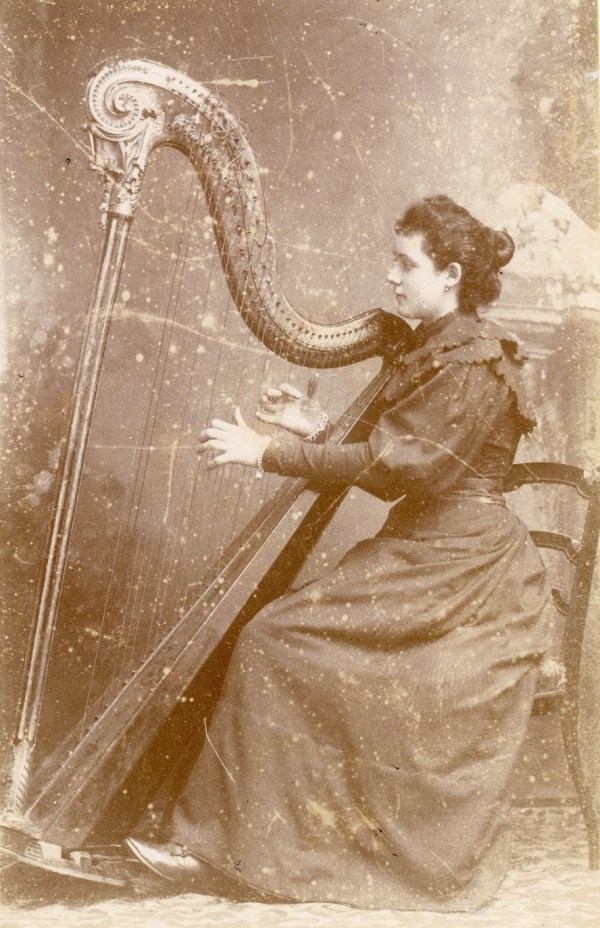
Is there any instrument as angelic to the ear and eye as the harp?  I had hoped to find a reference to Jeanne Fouillon online, but haven't succeeded so far.  Her harp is certainly very graceful and beautiful to the eye. The carte-de-visite was made by Augustin Michel in Grenoble, France, around 1890.   Jeanne's... Continue Reading →

Elegant and stylish in Hull, East Yorkshire

This couple has flair!  Her dress is decorated with intricate beadwork, ribbons and flowers.  Could it be a wedding dress?  What do you think?   The cabinet card was made by the studio of William James Wellsted & Son.  The back is dark green (blank).    

Diverse group of schoolgirls in Victorian London

If you've been following this blog for a while, you may remember a post from last October titled School dog and her charges (UK).  I had bought that CDV because the group portrait included a dog posing charmingly with students.  Then, after scanning it, I had noticed that one of the girls was of mixed-race... Continue Reading →

Workers in South Shields, England

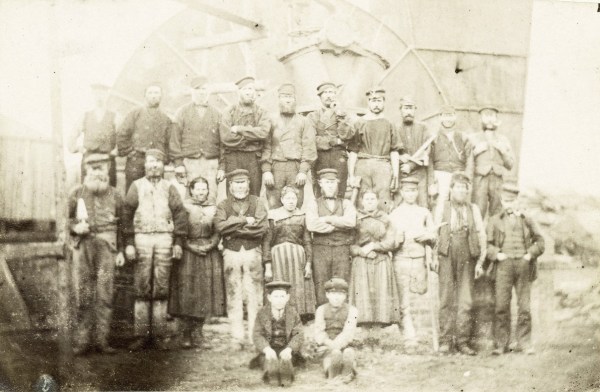
Here's another occupational carte-de-visite from England.  It looks like an early one, maybe early 1870s. At the mouth of the River Tyne on the North Sea, South Shields was a major shipbuilding center from the 1850s onward.  The photo was taken in an industrial setting, possibly a shipyard, by a photographer from the studio of... Continue Reading →

Brickmaker and son in Southborough, Kent

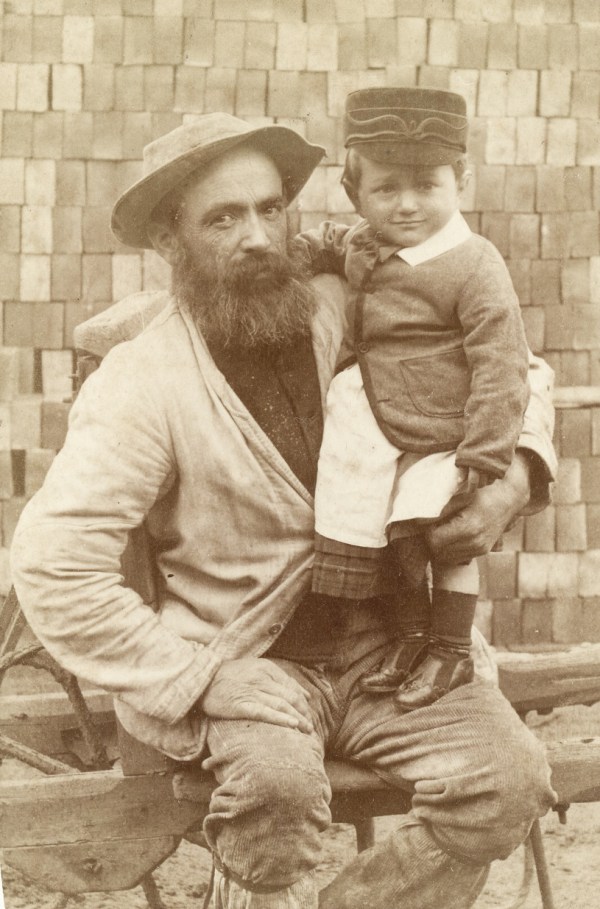
This carte-de-visite may have been made at High Brooms Brick and Tile Company, founded in 1885 in Southborough, Kent, England.  It's hard to tell what the father is sitting on, but we can see he's wearing gaiters of some sort below the knees, probably to keep his legs dry or clean. The photographer is identified on... Continue Reading →

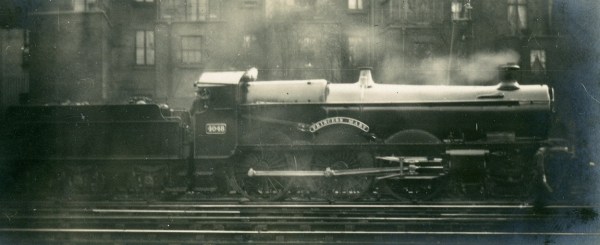
“Princess Victoria” renamed “Princess Mary” for one day (Feb. 28, 1922)

Built in 1914 at Swindon Works in Wiltshire, England, the steam locomotive Princess Victoria (4048) remained in service until 1953.  On February 28, 1922, HRH Princess Mary was to marry Viscount Lascelles, future Earl of Harewood.  A locomotive was required for the royal train.  The logical choice would have been an existing engine in the... Continue Reading →

Jean Ingelow, British poet and novelist

I had never heard of Jean Ingelow before I saw this carte-de-visite, but her pose and expression charmed me.  It was made by the studio of Elliott & Fry in London, where she lived.  The daughter of an English banker father and a Scottish mother, she was the oldest of ten children. Jean Ingelow (1820-1897)... Continue Reading →

Blog at WordPress.com.

Up ↑